Breathing Your Way to Sleep: The Night Protocols That Work
The pre-sleep mind treats bedtime as a staff meeting — agenda items, replays, tomorrow’s forecast — and the breath is the only attendee that can adjourn it. The night breathing protocols: what works, why it works and the honest practice curve.

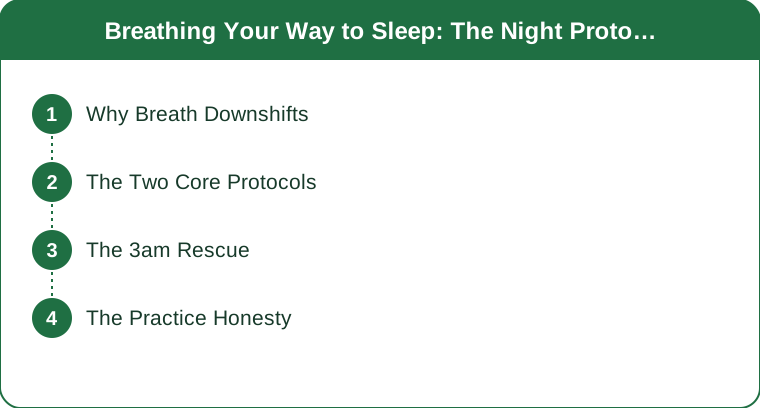
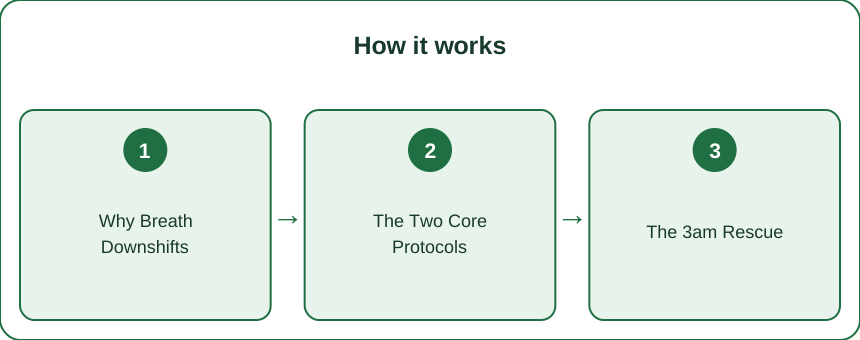
Why Breath Downshifts
The mechanism at bedtime: slow exhale-weighted breathing activates the parasympathetic brake (heart rate literally slows on every out-breath — extending exhales tilts the nervous system toward the state sleep requires), the attention anchor effect (counting breath occupies the channel the staff meeting was using — the mind can’t fully replay the day AND count to eight), and the conditioning bonus (the same protocol nightly becomes a sleep cue in itself — weeks in, the first counted breath starts the drowsiness; the ritual is half the drug).
The Two Core Protocols
The night toolkit: the 4-7-8 (inhale through the nose for 4, hold for 7, exhale audibly for 8 — four rounds; the hold-and-long-exhale structure is aggressive relaxation, and the light-headed newcomer note is real: start with fewer rounds, seated the first time), and the gentler extended exhale (in for 4, out for 6-8, no hold — the sustainable-forever version; ten slow rounds, lying down, jaw loose). Both work; 4-7-8 is the espresso shot, extended exhale is the pot of tea — most people settle on the tea.

The 3am Rescue
The middle-of-the-night application: the wide-awake-at-3am spiral responds to the same tools with amendments (stay lying down, eyes closed, no clock-checking — the time-math is the spiral’s fuel), the physiological sigh opener (the double-inhale, long-exhale pattern once or twice — the fastest acute downshift known — then settle into extended exhales), the body-scan pairing (breath plus the yoga-nidra-style attention rotation — two anchors beat one at 3am), and the twenty-minute rule (still wired after honest effort = get up, dim light, boring activity, return — the bed stays associated with sleep, not struggle).
The Practice Honesty
Calibrated expectations: breathing is a skill with a curve (night one is awkward counting; night ten is noticeably faster descent — the nervous system learns the route with repetition), it treats the racing-mind entry problem best (breathing helps you fall asleep; the staying-asleep and sleep-architecture layers belong to the schedule-light-caffeine fundamentals — the circadian files remain the foundation), and the stacking wisdom (breath protocol + consistent bedtime + the screens-away hour = the compound that actually moves sleep; the breath alone against a chaotic schedule is one oar). Free, silent, always installed: the adjournment motion the meeting can’t overrule.
Exhale longer than in, 4-7-8 or the gentle tea version, sigh at 3am, stack with the schedule. The staff meeting adjourns on breath — nightly, faster with practice.
Keep Reading
This article is for general informational purposes only and is not medical advice. Always consult a qualified health professional for guidance specific to you.