The Breathwork Edit: Your Breath Is a Tool — Learn It
Breathwork earned its trend status the honest way: the breath is the one lever of the nervous system you can pull consciously, the research on slow-breathing protocols is genuinely strong, and the equipment list is empty. The tool you’ve carried all along — finally with a manual.

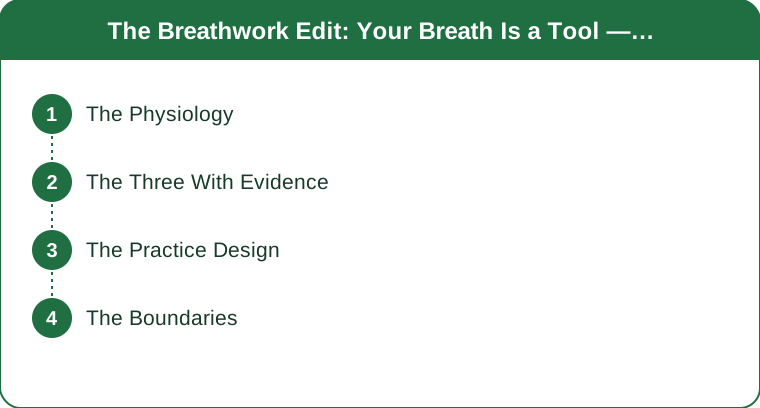
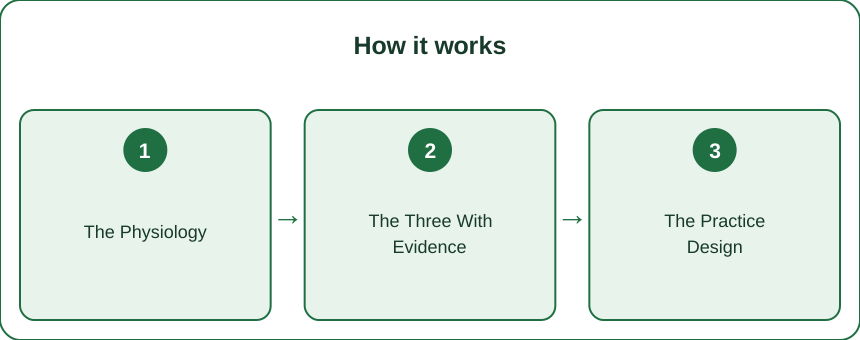
The Physiology
Why breath moves the nervous system: exhaling activates the parasympathetic brake (heart rate literally slows on every out-breath — extending exhales tilts the whole system toward calm), slow breathing at around 5-6 breaths per minute maximizes heart-rate variability (the coherent-breathing sweet spot the research keeps landing on), and the mechanism is fast (measurable calm within minutes, not weeks — breathwork is the rare wellness practice with same-session receipts). The breath is the remote control; the techniques are just button combinations.
The Three With Evidence
The core library: the physiological sigh (double inhale through the nose, long sighing exhale — the fastest acute stress-relief pattern in the research; one to three repetitions, mid-meeting-legal), extended-exhale breathing (inhale 4, exhale 6-8 — the everyday downshift; the ratio matters more than the numbers), and box breathing (4-4-4-4 — the focus-and-steadiness protocol the tactical world made famous). Honorable mention: coherent breathing (equal 5-ish counts in and out for 5-10 minutes — the HRV builder). Every technique nose-first where possible.

The Practice Design
The five-minute daily: anchor one technique to one moment (the extended exhale before sleep, the sigh at the desk transition, box breathing before the hard conversation — the exercise-snacks logic applied to calm), the posture note (tall-but-relaxed lets the diaphragm actually work — the slouched breath is half a breath), and the progression truth (breathwork trains like fitness: the same protocol gets deeper and faster-acting over weeks as the nervous system learns the route). Apps and timers help; the breath was always offline.
The Boundaries
The honest edges: intense styles exist (the fast-breathing, altered-state genres — Wim Hof-adjacent and holotropic tiers) and deserve caution flags (never in water, not while driving, and contraindicated for some conditions — the slow protocols above carry none of these risks), breathwork complements rather than replaces treatment for anxiety conditions (a tool in the kit, not the kit), and the dizziness rule (any technique producing lightheadedness gets gentler — the goal is regulation, not fireworks). The slow-breathing core is safe, free and five minutes — the rare trend where the hype and the evidence hold hands.
Exhale longer than you inhale, sigh twice when acute, five minutes daily. Breathwork is the nervous system’s manual override — installed at birth, documented at last.
Keep Reading
This article is for general informational purposes only and is not medical advice. Always consult a qualified health professional for guidance specific to you.