Why Do Breathing Exercises Make You Dizzy? Here's What's Actually Happening
Quick Answer: Dizziness during breathwork almost always means you’re breathing too deeply or too fast, lowering blood CO2 faster than your body can adjust (hyperventilation, even at a slow pace). The fix is smaller breaths and a longer exhale, not more effort.
You sat down to do 5 minutes of calming breathwork and ended up gripping the chair, head swimming. That reaction scares people off breathwork entirely — but it’s a mechanical issue with how you’re breathing, not a sign breathwork isn’t for you.

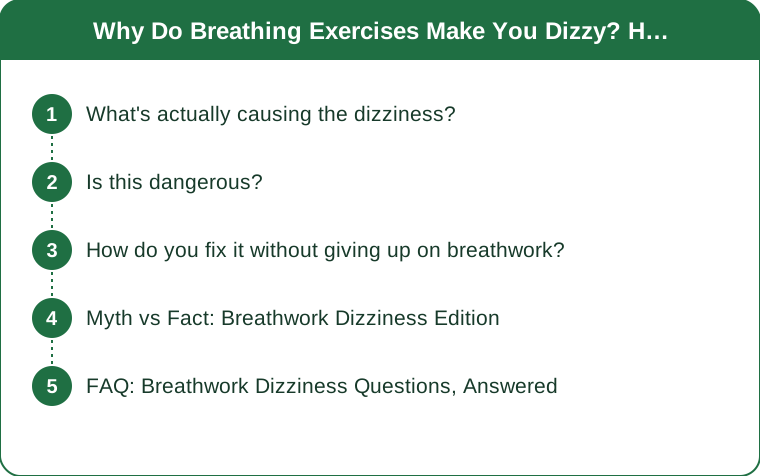
What’s actually causing the dizziness?
Over-breathing relative to what your body needs at rest. Big, deep inhales — especially paired with fast pacing — expel CO2 faster than your metabolism produces it.
CO2 isn’t just waste gas; it’s what triggers blood vessels, including in your brain, to dilate properly. Low CO2 (hypocapnia) causes those vessels to constrict slightly, which is the direct mechanical cause of that swimmy, lightheaded feeling — it’s not ‘too much oxygen,’ which is a common but inaccurate explanation.
Is this dangerous?
For a healthy person doing breathwork intentionally, it’s uncomfortable but self-limiting — your body’s own chemoreceptors will push you to breathe normally again within a minute or two of stopping.
It’s worth being more cautious if you have a history of fainting, low blood pressure, or a heart condition — sit or lie down before any breathing practice, and stop immediately if dizziness is severe rather than mild.

How do you fix it without giving up on breathwork?
Three adjustments, easiest first:
- Shrink the breath size. You should be able to comfortably hold a conversation at that breathing depth — most beginners breathe 2-3x bigger than needed.
- Lengthen the exhale relative to the inhale. A 4-count in, 6-8 count out ratio keeps CO2 from dropping too fast, unlike equal-count patterns like box breathing done too vigorously.
- Sit instead of stand, at least for your first few sessions, removing the fall risk while your body recalibrates.
Myth vs Fact: Breathwork Dizziness Edition
Myth: Dizziness means you’re detoxing or releasing trapped tension. Fact: It means your CO2 dropped too fast. It’s a mechanical chemistry response, not an emotional release — though the two can happen in the same session for other reasons.
Myth: More air in equals more calm. Fact: Past a certain point, bigger breaths increase dizziness risk without adding calming benefit — the nervous-system calming effect comes mainly from the slow exhale, not inhale volume.
Myth: You should push through the dizziness to get the benefits. Fact: Stopping, breathing normally for a minute, and restarting smaller is the correct response — pushing through just extends the discomfort.
FAQ: Breathwork Dizziness Questions, Answered
Which techniques are more likely to cause dizziness?
Fast-paced or breath-holding techniques (some forms of holotropic or Wim Hof-style breathing) carry higher dizziness risk than slow techniques like extended-exhale or box breathing done gently.
Should beginners start with box breathing?
It’s a reasonable starting point, but go gentler than the standard 4-4-4-4 count suggests — a 4-4-6-2 (shorter hold after exhale) is often more comfortable for a first week.
When should I see a doctor about breathing-related dizziness?
If dizziness happens with normal daily breathing (not just intentional breathwork), or comes with chest pain, numbness, or fainting, that needs medical attention rather than a breathing technique adjustment. This is general information, not medical advice.
TL;DR:
- Dizziness in breathwork is usually CO2 dropping too fast from over-breathing, not too much oxygen
- Shrink your breath size and lengthen the exhale — that fixes most cases immediately
- Sit down for your first few sessions if you have any fainting or blood pressure history
- Daily-life dizziness (not just during practice) warrants a doctor visit
Start smaller than feels impressive — the calming effect comes from the long exhale, not a dramatic inhale.
Keep Reading
This article is for general informational purposes only and is not medical advice. Always consult a qualified health professional for guidance specific to you.