The Breathing Technique That Actually Helps With Motion Sickness Mid-Trip
Quick Answer: Slow, extended-exhale breathing (inhaling for a count of 4, exhaling for a count of 6-8) helps calm the nervous system’s stress response that motion sickness triggers, which can reduce the intensity of nausea even though it doesn’t address the underlying inner-ear conflict causing motion sickness itself.
Motion sickness starts as a sensory conflict in the inner ear, but the nausea and discomfort you actually feel are amplified by the body’s stress response — and that part is genuinely responsive to breathing technique.

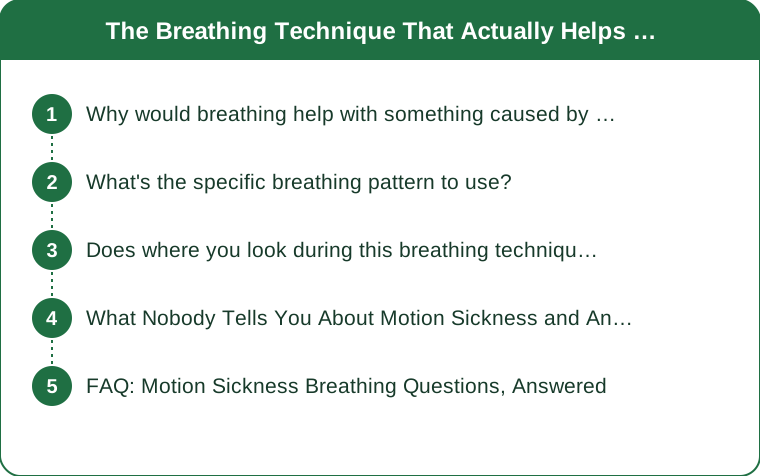
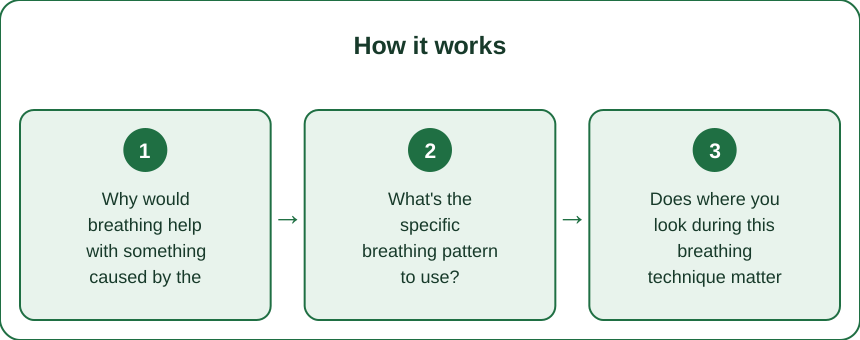
Why would breathing help with something caused by the inner ear?
Motion sickness originates from a mismatch between what your inner ear senses (motion) and what your eyes see (relative stillness, if reading or looking at a phone), but the body’s actual nausea and discomfort response is amplified through the sympathetic nervous system’s stress reaction to that sensory conflict.
Slow, extended-exhale breathing activates the parasympathetic nervous system, which counters this stress response — it doesn’t fix the underlying sensory mismatch, but it can meaningfully reduce how intensely the body reacts to it, which for many people means noticeably less severe nausea.
What’s the specific breathing pattern to use?
Inhale slowly through the nose for a count of 4, then exhale slowly for a count of 6-8 — the extended exhale relative to the inhale is the key element, since a longer exhale specifically triggers more parasympathetic activation than equal-length inhale and exhale. Repeat this for several minutes, or for the duration of the uncomfortable stretch of the trip.

Does where you look during this breathing technique matter too?
Yes, significantly — combining the breathing technique with looking at a fixed point on the horizon, rather than a phone or book, addresses both the sensory conflict itself and the stress response simultaneously, which tends to work better than either approach alone.
What Nobody Tells You About Motion Sickness and Anxiety
Here’s a less commonly discussed connection: anxiety about getting motion sick can itself worsen motion sickness, creating a compounding cycle where the fear of nausea activates the same stress response that makes nausea worse. Breathing technique interrupts this loop specifically, which is part of why it can help even beyond its general calming effect.
FAQ: Motion Sickness Breathing Questions, Answered
How long before this breathing technique actually helps?
Many people notice some reduction in symptom intensity within a few minutes of consistent slow breathing, though it works better as prevention started early rather than as a rescue technique once nausea is already severe.
Does this replace motion sickness medication?
No — for people with significant motion sickness, medication or other established remedies may still be necessary; breathing technique is a complementary tool, not a guaranteed replacement. This is general information, not medical advice.
Does this work for all types of motion sickness (car, boat, flight)?
The underlying mechanism is the same across types, so the technique applies similarly, though severity and effectiveness can vary by individual and by the specific type of motion involved.
TL;DR:
- Motion sickness nausea is amplified by the nervous system’s stress response
- Extended-exhale breathing (4 in, 6-8 out) activates the calming parasympathetic response
- Combining breathing with a fixed horizon point addresses both cause and reaction
- Anxiety about getting sick can compound symptoms — breathing interrupts that loop
This is general information, not medical advice — persistent or severe motion sickness is worth discussing with a doctor for additional options.
Keep Reading
This article is for general informational purposes only and is not medical advice. Always consult a qualified health professional for guidance specific to you.