Using Breathwork in the Middle of an Actual Argument (Not Just to Prepare For One)
Quick Answer: Shrink the technique. Two or three extended exhales, timed to when the other person is talking, aimed at slightly less escalated rather than calm. The quiet-room version needs minutes and bandwidth you don’t have mid-argument — which is why it gets abandoned exactly when it’s needed.
Everything you’ve read about breathwork assumes a quiet room, a few spare minutes, and nobody waiting for you to respond.
An argument offers none of those. Which is why the technique that works beautifully on a Sunday evening evaporates on a Tuesday.

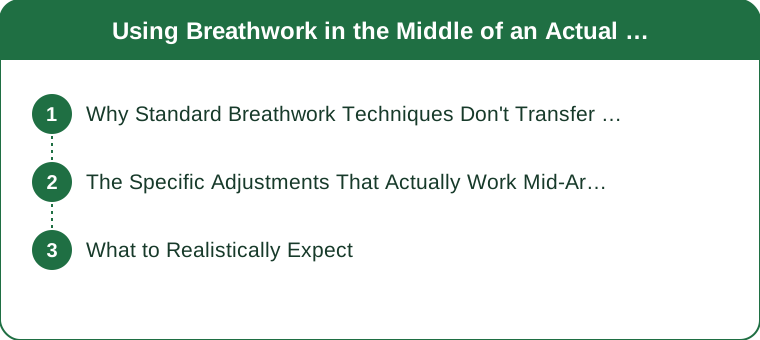
Why don’t standard breathing techniques survive a real argument?
They assume time you don’t have. Structured patterns like box breathing want several uninterrupted minutes. An active back-and-forth doesn’t offer them.
Doing it visibly creates its own problem. Obviously pausing to breathe in front of someone can read as dismissive or theatrical, adding social friction on top of the original disagreement.
Arousal is much higher than practice conditions. Fight-or-flight activation during real conflict is far above the calm baseline where you learned the technique, which makes the same pattern much harder to execute.
Bandwidth narrows. A stress response reduces available working memory, so remembering a technique — let alone performing it precisely — gets genuinely harder exactly when you need it.
The other person keeps going. Unlike solo practice, your conversational partner continues talking, reacting, and possibly escalating throughout.
None of that means breathwork fails here. It means the quiet-room format doesn’t transfer.
What actually works mid-argument?
- A few extended exhales, not a full pattern. Executable in seconds, no announcement required.
- Lengthen only the out-breath. The exhale is what signals the calming response, and you can extend it while still listening — even, with practice, while speaking.
- Time it to their turn. Do it while the other person is talking, or in a natural lull. You’re using space that already exists rather than creating conspicuous silence.
- Use a verbal bridge if you need a pause. “Let me think about that for a second” buys three seconds without reading as ignoring them.
- Aim for less escalated, not calm. Full calm mid-argument is an unrealistic bar that sets the technique up to feel like it failed.

Myth vs Fact
Myth: If you’re breathing properly you’ll stop feeling angry. Fact: It reduces physiological arousal. The disagreement is still real and the feelings are still valid — you’re lowering the volume, not changing the content.
Myth: Taking a deep breath before responding is enough. Fact: One big inhale is mildly activating. The calming effect lives in the extended exhale, which is why “take a deep breath” advice so often does nothing.
Myth: You should announce that you’re taking a breathing break. Fact: Sometimes, with a partner who’s on board. Mid-escalation with someone who isn’t, it frequently lands as a power move. Covert is the safer default.
Myth: If you can’t stay regulated, you’ve failed. Fact: Past a certain escalation point, leaving the conversation is the more skillful move, not the fallback. Knowing that line is the actual skill.
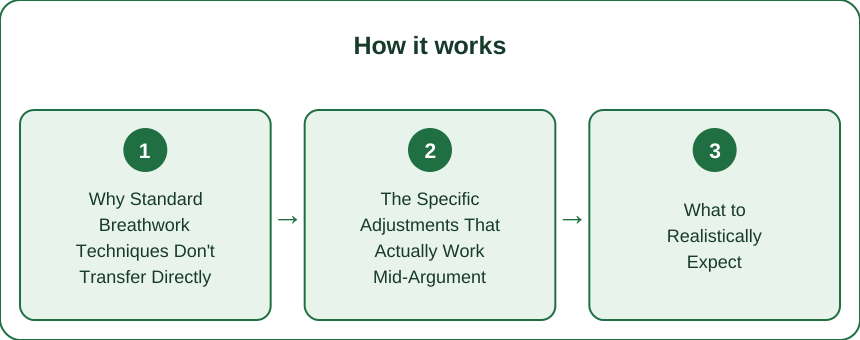
What should you realistically expect?
Partial de-escalation. It takes the edge off arousal. It doesn’t dissolve the stakes of the actual disagreement, and expecting that guarantees disappointment.
A skill that needs low-stakes reps. Practice the shortened covert version during minor everyday friction — a tense work call, traffic, a mildly annoying text. That’s how it becomes available under real pressure.
A genuine ceiling. Past a certain point, stepping away entirely beats any in-the-moment adjustment. “I want to keep talking about this, I need twenty minutes first” is a complete sentence.
Self-regulation only. It manages your physiological state. It has no direct effect on the other person or on the content of the conflict.
Gradual improvement. Repeated use in small conflicts builds capacity for larger ones. First high-stakes attempts rarely go well, and that’s expected rather than diagnostic. Related: preparing before a difficult conversation is a separate and easier skill worth having too.
Worth stating plainly: this is a self-regulation tool, not a conflict resolution method and not a safety plan. If arguments in a relationship involve intimidation, threats, or fear, that isn’t a breathing problem — reach out to a counsellor or a domestic violence support service. And if anger feels uncontrollable or you’re frequently escalating past where you intended, a therapist can help far more than any technique on this page.
FAQ
Can the other person tell I’m doing it?
Usually not, if you keep it to extended exhales during their turn and skip the visible posture changes. The tells are closing your eyes, holding up a hand, or an audible sigh — a long exhale through a slightly parted mouth reads as ordinary.
What if I’m too escalated to remember any of this?
Then you’re past the useful range, and stepping away is the correct call. That’s not a failure of the technique; recognizing the threshold is the more valuable skill, and it gets more reliable with practice.
Does this work over text or on a call?
Better, actually — nobody can see you, and pauses are less conspicuous. On calls especially, the mute button plus three extended exhales is close to ideal conditions.
TL;DR:
- The quiet-room format fails in arguments because it needs time, calm, and bandwidth you don’t have.
- The workable version is short and covert: a few extended exhales during the other person’s turn.
- Use a verbal bridge like “let me think about that” if you need to create a pause.
- Aim for slightly less escalated, not calm — the wrong bar makes a working technique feel broken.
- Practice it during small everyday friction so it’s available when stakes rise.
- Past a certain escalation point, stepping away works better. Intimidation or fear in a relationship needs support services, not breathing tips.
Keep Reading
This article is for general informational purposes only and is not medical advice. Always consult a qualified health professional for guidance specific to you.