The Breathwork Routine That Actually Calms Pre-Presentation Nerves
Quick Answer: A 90-second sequence of extended exhale breathing (4 counts in, 6-8 counts out) done immediately before walking into a presentation lowers physiological arousal fast enough to steady a shaky voice and racing heart, more reliably than a single generic deep breath.
“Just take a deep breath” is the most common pre-presentation advice and one of the least specific. The exhale length, not the inhale, is actually doing most of the calming work — and most people get that part backwards under pressure.

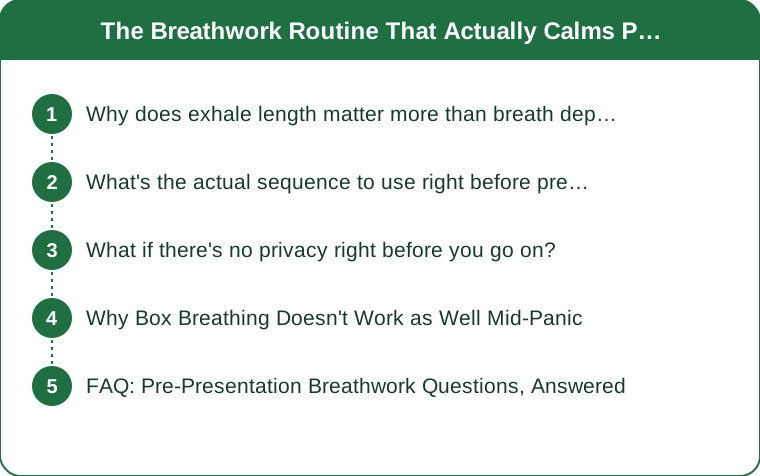
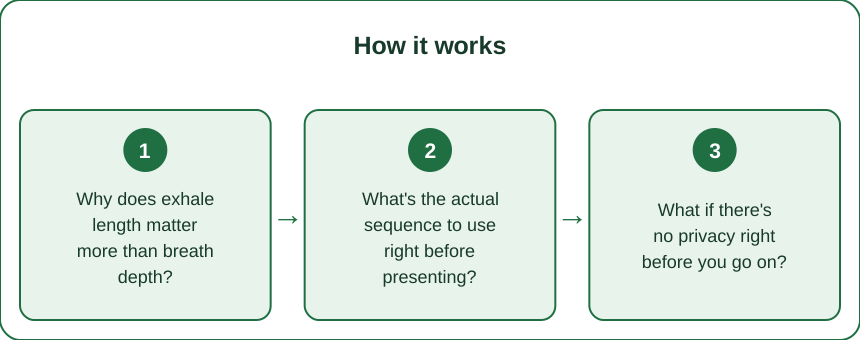
Why does exhale length matter more than breath depth?
A long, deep inhale alone can actually increase activation in some people, since a big breath in is part of the body’s alarm response. The calming signal comes specifically from extending the exhale longer than the inhale, which activates the parasympathetic nervous system — the body’s built-in “stand down” switch — more directly than inhale depth does.
This is why gasping a single big breath before walking on stage often doesn’t help as much as expected: it’s addressing the wrong half of the breath cycle.
What’s the actual sequence to use right before presenting?
90 seconds, done privately right before you’re announced or called up:
Inhale through the nose for a count of 4. Exhale slowly through the mouth for a count of 6-8, longer than the inhale. Repeat for 6-8 full cycles, roughly 90 seconds total.
Keep the exhale audible and slow rather than rushed — a fast exhale doesn’t create the same extended parasympathetic signal as a slow, controlled one, even at the same total count.

What if there’s no privacy right before you go on?
A subtler version works discreetly: extend your exhale silently through slightly pursed lips while keeping your inhale through the nose small and quiet. Even 4-5 cycles done inconspicuously while others are talking or setting up equipment provides a meaningful physiological shift.
A single well-executed extended exhale, timed right as your name is called, can also work as a fast reset if you genuinely have no time for a full sequence.
Why Box Breathing Doesn’t Work as Well Mid-Panic
Box breathing (equal counts in, hold, out, hold) is a genuinely useful technique for general stress management, but the hold segments can feel counterproductive in acute pre-presentation anxiety, since holding the breath while already feeling breathless can intensify the sensation of not getting enough air.
Extended-exhale breathing without holds tends to feel more immediately relieving in a high-arousal moment specifically because there’s no pause working against the urge to breathe. Save box breathing for lower-stakes, more gradual stress management — use extended exhale for the acute, minutes-before moment.
FAQ: Pre-Presentation Breathwork Questions, Answered
How soon before presenting should I do this?
Right before, ideally in the final 1-3 minutes — doing it too early lets the nervous activation build back up before you actually start speaking.
Will this stop my voice from shaking completely?
It significantly reduces physiological arousal, which is the main driver of voice shakiness, but it’s not a guarantee of zero nerves — the goal is manageable, not eliminated.
Can I use this technique during the presentation if I get nervous mid-talk?
Yes — a single extended exhale during a natural pause (advancing a slide, taking a sip of water) is discreet enough to use without anyone noticing, and can reset a spike in nerves mid-presentation.
TL;DR:
- Extended exhale (longer than inhale) drives the calming effect more than inhale depth
- Use a 90-second sequence: 4 counts in, 6-8 counts out, for 6-8 cycles
- A discreet version works even without privacy right before you’re called up
- Skip breath-holds (box breathing) for acute pre-presentation nerves specifically
The exhale is doing the real work — get that part right and the rest of the breath takes care of itself.
Keep Reading
This article is for general informational purposes only and is not medical advice. Always consult a qualified health professional for guidance specific to you.