The Breathing Fix for Cold Morning Air That Makes You Cough
Quick Answer: Cold air is dry air, and breathing large volumes of it through your mouth delivers it to your airways before your body can warm and humidify it - which is what causes the coughing, tightness, and throat irritation on the first cold mornings. Nasal breathing warms and moistens air far more effectively than mouth breathing, and a scarf or buff over the nose and mouth adds a further layer by trapping warm moist air. Slow the pace for the first few minutes, and if you get wheezing or persistent chest tightness, get it assessed - exercise-induced airway narrowing is common and treatable.
The first genuinely cold morning of the season arrives in the next few weeks, and a lot of people will spend it coughing on a walk they have done all summer without noticing.

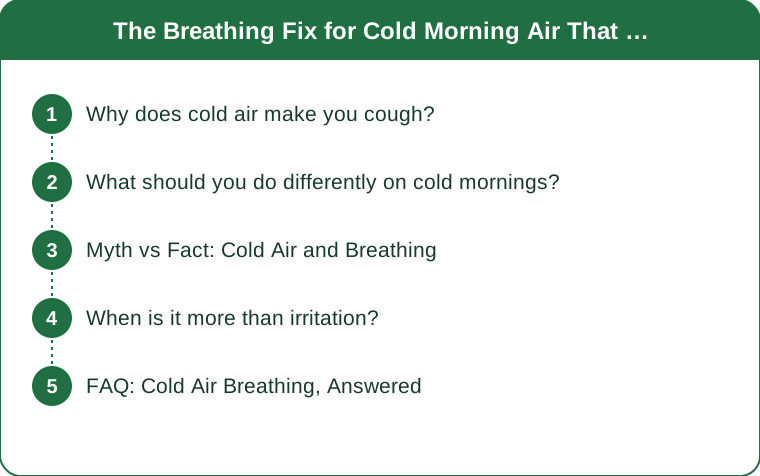
Why does cold air make you cough?
Cold air holds much less moisture than warm air. Air at low temperature simply cannot carry the water vapour that summer air does, so what reaches your airways is both cold and dry.
Your airways lose heat and water to warm it. The lining of your airways humidifies and warms incoming air, and when the incoming air is cold and dry, that process draws heat and moisture from the tissue itself.
Drying of the airway lining triggers a response. Airway drying is a well-described mechanism behind exercise-induced airway narrowing, and even in people without asthma it can produce coughing, throat irritation, and a tight sensation in the chest.
Breathing rate multiplies the effect. At rest you might move a modest volume of air; during brisk walking or running you move considerably more, so the drying load rises sharply with effort.
And mouth breathing bypasses your best conditioning system. The nose is far more effective at warming and humidifying air than the mouth, so switching to mouth breathing - which most people do as effort rises - delivers colder, drier air deeper.
The first cold mornings hit hardest. There appears to be an adjustment period, and the transition weeks - when a warm afternoon is followed by a genuinely cold morning - are when most people notice it.
What should you do differently on cold mornings?
Breathe through your nose as much as the effort allows. This is the single most effective change. Nasal breathing warms and humidifies air far more effectively, and it also slows your breathing rate slightly, which reduces the total volume of cold air you process.
Cover your nose and mouth with a scarf or buff. A light layer of fabric traps warm moist exhaled air and pre-warms the next breath. This is a genuinely effective, well-established approach and it costs nothing.
Warm up gradually for the first five to ten minutes. Starting at a lower intensity lets your airways adjust before you are moving large volumes of air, and it reduces coughing considerably for most people.
Warm up indoors before going out. A few minutes of easy movement in the hallway before stepping into the cold means you are not going from cold and still to cold and working in one step.
Stay hydrated. Airway humidification requires water, and people drink noticeably less as the weather cools while still losing fluid to breathing and to exercise.
And breathe through your nose on the way home too. The tendency is to relax into mouth breathing once the effort ends, which is when the cold air keeps arriving without the effort that justified it.

Myth vs Fact: Cold Air and Breathing
Myth: Cold air damages your lungs. Fact: for healthy people, cold air causes irritation rather than damage, and the symptoms resolve. It is uncomfortable, not harmful, though it is a legitimate trigger for people with asthma and related conditions.
Myth: Coughing in the cold means you are unfit. Fact: it is a response to airway drying and it affects trained athletes routinely - it is more common in endurance athletes than in the general population precisely because they move so much air.
Myth: You should breathe through your mouth to get more air. Fact: on cold mornings, nasal breathing is the better default because it conditions the air. Switch to your mouth when the effort genuinely demands it, then return to the nose.
Myth: A scarf over your face is just for warmth. Fact: it measurably alters the temperature and humidity of the air you inhale, which is why it is standard advice for cold-weather exercise and for people whose asthma is cold-triggered.
Myth: If it happens every winter, it is just how you are. Fact: recurring cough, wheeze, or chest tightness with cold-weather exercise is worth having assessed. Exercise-induced bronchoconstriction is common, frequently undiagnosed, and manageable with proper treatment. This is general information, not medical advice.
When is it more than irritation?
Wheezing is a signal to get assessed. An audible whistling on breathing out is not typical of simple cold-air irritation and warrants a clinician’s opinion.
Chest tightness that persists after you stop and warm up is different from a passing cough and is worth investigating.
Symptoms that reliably appear a few minutes into exercise and peak after stopping fit the pattern of exercise-induced airway narrowing rather than simple cold irritation.
Any breathlessness disproportionate to the effort deserves attention rather than a technique adjustment.
And an existing asthma diagnosis changes the plan. Cold air is a recognized trigger, and anyone with asthma should have a cold-weather plan discussed with their clinician - including whether and when to use a reliever inhaler before exercise, which is a standard approach but must be individualized.
This is general information, not medical advice. Persistent, worsening, or unfamiliar breathing symptoms should be assessed by a clinician rather than managed with breathing technique alone.
FAQ: Cold Air Breathing, Answered
Why does cold air make me cough when I exercise?
Cold air is dry, and warming and humidifying it draws heat and moisture from your airway lining. That drying is a recognized trigger for coughing and chest tightness, and the effect increases with how much air you are moving.
Does breathing through your nose help in the cold?
Yes, substantially. The nose warms and humidifies incoming air far more effectively than the mouth, and nasal breathing also slightly slows your breathing rate, reducing the total volume of cold dry air reaching your airways.
Does a scarf over your mouth actually work?
It does. A light fabric layer traps warm moist exhaled air and pre-warms the next breath, which measurably changes the air you inhale. It is standard advice for cold-weather exercise for exactly this reason.
When should I see a doctor about cold-weather breathing problems?
If you wheeze, have chest tightness that persists after stopping, get breathlessness out of proportion to your effort, or have symptoms that recur every cold season. Exercise-induced airway narrowing is common and treatable, and it is frequently mistaken for being unfit.
TL;DR:
- Cold air is dry air, and warming it draws heat and moisture from your airway lining - that drying causes the cough.
- Nasal breathing is the single most effective fix; it warms and humidifies air far better than mouth breathing.
- A scarf or buff over the nose and mouth traps warm moist air and genuinely changes what you inhale.
- Warm up indoors first and start easy for five to ten minutes before raising the effort.
- Wheezing, persistent tightness, or breathlessness out of proportion to effort deserves a clinician’s assessment.
The first cold morning is coming in the next few weeks. Nose, scarf, and a slow first ten minutes handles almost all of it. This is general information, not medical advice.
Keep Reading
This article is for general informational purposes only and is not medical advice. Always consult a qualified health professional for guidance specific to you.